

Sewage Treatment Plants, also known as Wastewater Plants, are used when access to a Main Sewage Drain is not available for your area. They break down sewage by passing it through several different chambers, each with a different function, to separate and treat the waste. Friendly bacteria living in the treatment plant are used to break down organic waste, creating a much cleaner, environmentally friendly effluent.
The size of a Sewage Treatment Plant depends on the number of people using it, for example, a domestic sewage treatment plant can service up to 50 people or 15,000 litres. For commercial buildings, industrial facilities and public facilities, a larger commercial sewage treatment plant is required.
In order to keep your sewage treatment plant in optimal condition you should follow the manufacturer’s guidance and keep it regularly maintained; Rule 12 of the UK Government guidelines recommends that you have your tank emptied and desludged at least once a year before it exceeds maximum capacity. This will prevent excessive build-up and ensure it has enough capacity to work efficiently, as well as prevent pollution.
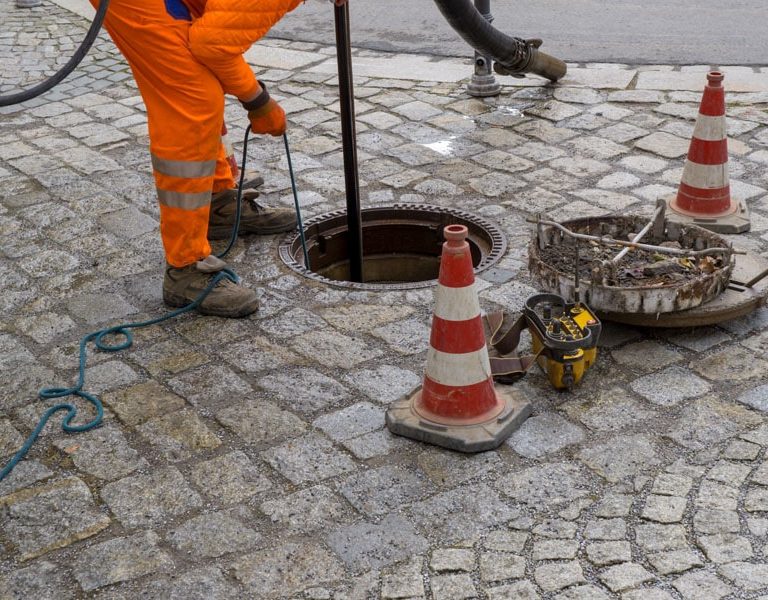
Our engineers have the specialist equipment for inspecting, emptying, and maintaining Sewage Treatment Plants and can set up annual services. Some of these services include:
- Sewage Treatment Plant Installation
- Sewage Treatment Plant Guide & Advice
- Building Drainage Surveys
- Plant Servicing & Maintenance
- Effluence Quality Checks
- Desludging and Cleaning
A septic tank is used to collect sewage and wastewater from a limited number of domestic properties. They are generally made up of two chambers, the sewage settles in the first chamber to collect scum (fats, oils and grease) on the top and sludge (solid waste) on the bottom; the separated liquid in the middle filters through into the second chambers and is discharged to a nearby soakaway or drainage field.
A Sewage Treatment Plant typically has an extra chamber to treat wastewater and sewage to a higher level. After collecting the sewage in the first chamber and letting it settle to remove scum and sludge, the wastewater flows into a second chamber is circulated to increase contact with air. This increases oxygen levels and encourages bacteria to grow; breaking down the sewage. This circulated wastewater flows into the third chamber where the bacteria is allowed to settle on the bottom, and the treated water flows out to a drainage field or soakaway. This creates a cleaner and environmentally friendly process by breaking down the waste over time.

Drainage Solutions
- All Drainage Services Catered For
- 24/7 - 365 Days A Year Callouts
- Emergency & Routine Drainage Services
- Call Us On: 07919 339375